Transparency
AdCortex™ Methodology
We believe you should understand exactly what our model does — and doesn't — before trusting it with your ad spend. This page explains AdCortex in plain language.

What is AdCortex?
AdCortex is a machine learning model that predicts viewer attention and engagement from the audio-visual features of your ad. It processes your video or image frame by frame and produces a continuous engagement signal — essentially a prediction of how strongly an average viewer's attention would be captured at each moment.
The model is hosted on Replicate and runs as a serverless prediction job. Your file is uploaded to secure storage, processed, and the result is returned — typically within 60–90 seconds for a 30-second video.
What is it trained on?
The benchmark used to calibrate and contextualize AdCortex scores is built from 76 curated top-performing ads from the TikTok Creative Center — the ads TikTok itself promotes as exemplary creative in its Creator Academy. These are not random ads; they are the ones TikTok has validated as driving strong performance across engagement, click-through, and conversion metrics.
Your ad's score is expressed as a percentile relative to this benchmark. A score of 0.80 means your ad's predicted engagement profile outperforms 80% of those curated top-performers. Scores of 0.75 and above are labelled strong, 0.40–0.75 moderate, and below 0.40 weak.
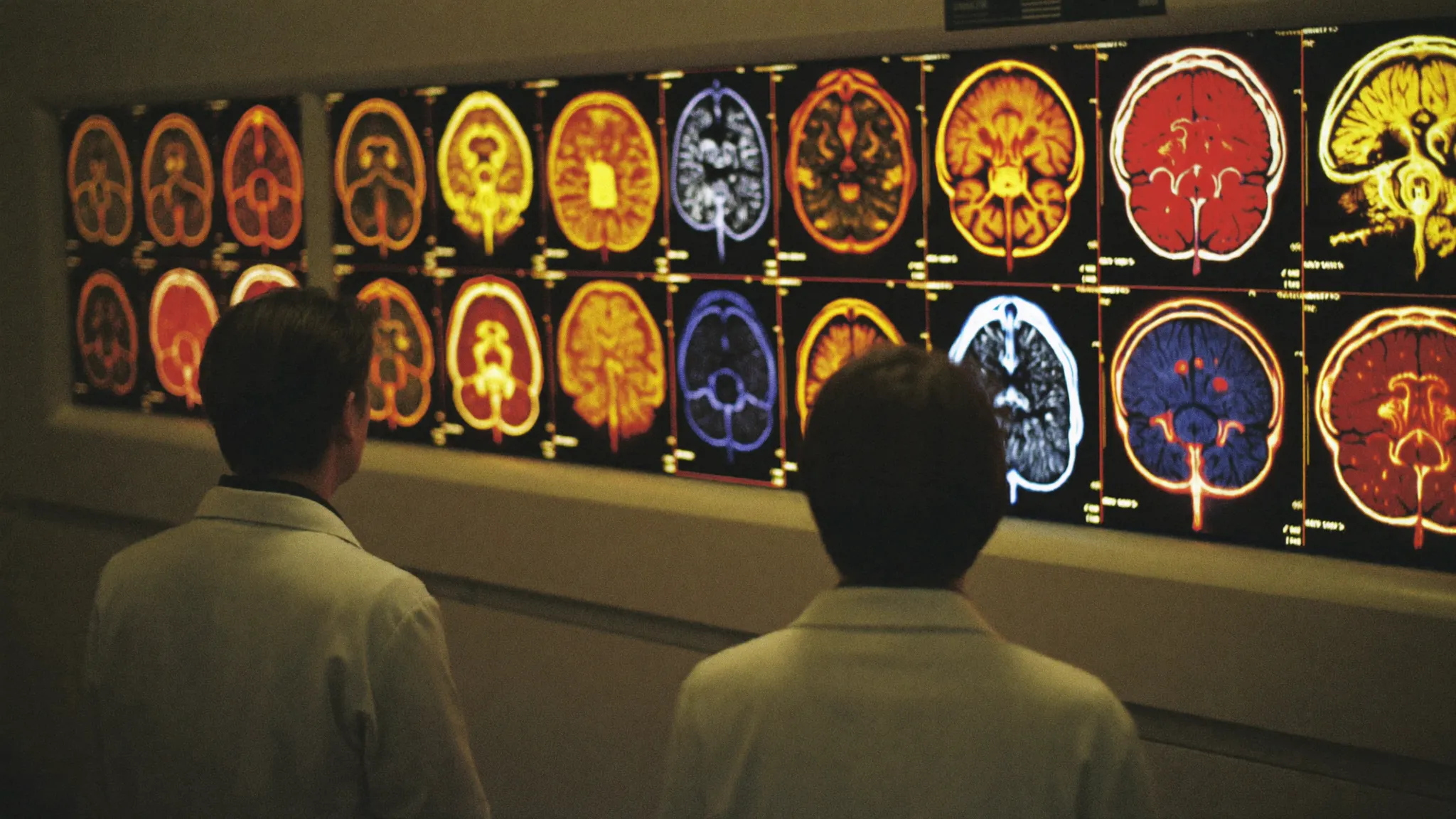
The underlying model comes from published neuroscience research: it was trained on fMRI data — real brain scans recorded while people watched video — and learned to predict how visual attention responds to audio-visual content. Scoring your ad involves no physiological measurement of any kind; the prediction comes from the creative itself.
We plan to grow this benchmark over time and will update the count as we add more validated ads.
What does the score predict?
AdCortex predicts viewer attention and engagement — not clicks, not conversions, not ROAS. These are related but distinct. An ad with high engagement signal is more likely to hold attention, which is a prerequisite for conversion — but offer, targeting, landing page, and audience all determine whether attention turns into revenue. The case for why predicted attention is worth acting on at all — and what it can't tell you — is laid out in how to predict ad performance.
The four metrics we surface are derived from the engagement signal:
- Hook Strength — the average engagement signal in the first 3 seconds. This predicts whether viewers stop scrolling.
- Attention Drop — the earliest second where engagement falls meaningfully below its peak. This is where you're losing people.
- Peak Moment — the frame with the highest predicted engagement. Often the best thumbnail candidate.
- Purchase Signal — the average engagement in the final 20% of the video (your CTA window). High signal here means viewers are still engaged when you make your offer.
What it doesn't claim
AdCortex does not:
- Directly measure brain activity or physiological response
- Guarantee ad performance or conversion rates
- Account for audience targeting, offer quality, or platform algorithm
- Replace A/B testing with real ad spend
Think of AdCortex as a fast, affordable directional signal — a way to catch obviously weak creative before you pay to promote it, and to understand why it's weak so you can fix it.
Why "predicted attention" vs. "neural"?
Some tools in this space imply they measure your viewers' brains. We don't, and we say so. AdCortex's training data came from real fMRI research, but when it scores your ad it is making a prediction from the creative's visual and audio features — no person is measured, no electrodes, no panel. We use predicted attention and engagementbecause that's what the number actually is. Honest language builds more trust than impressive-sounding language. For how this approach compares to panel-based and biometric platforms, see neuromarketing tools and their alternatives; for reading the output itself, see how to read an attention curve.
Questions?
If you have questions about the model, training data, or how to interpret your scores, contact us. We're happy to walk you through your results.